

01
The operational conflicts in a multi-branch network
Traditional WANs are often managed one circuit and device at a time while applications span headquarters, branches and cloud. Variable circuit quality, distributed routing, indirect cloud access and limited evidence make new-site rollout and troubleshooting increasingly dependent on individual experience.
Different circuit capability
Private, internet and mobile options differ by region and need comparable latency, jitter, loss and availability measurements.
Unclear application paths
Office, video, ERP, cloud and file transfer have different requirements; sending all traffic through one path creates contention.
Distributed configuration and change
Sites maintain routing, VPN and policy separately, making branch additions and global updates prone to inconsistent versions.
Insufficient end-to-end evidence
Carriers see circuits and application teams see failed access, while the enterprise lacks a joined view across local, WAN and cloud.
02
Connecting headquarters, branches and cloud
The architecture combines site edges, available circuits, control and management, application policies and secure access. Existing addressing, routing and security-device relationships remain visible, with explicit decisions about local cloud access, headquarters transit and security inspection.
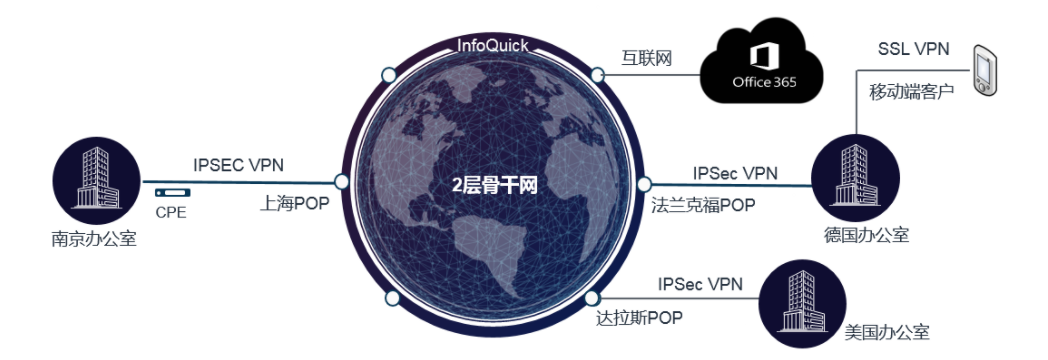
Site edge
Deployed at headquarters, branches or data centers to terminate circuits and execute routing, application recognition and local policy.
WAN transport
Combines private, internet or other available services as primary, backup, load-sharing or application-selected paths.
Central policy
Manages site templates, business priority, path conditions and access rules through one controlled entry with change records.
Security and cloud access
Integrates existing firewalls, identity, cloud networks and remote access without assuming that an SD-WAN edge is the entire security architecture.
03
Application recognition and path selection
Policy starts with real business behavior, not a permanent primary circuit. Transactions, real-time meetings, bulk transfer and general internet can use different priority, quality thresholds and fallback. Unknown or encrypted traffic needs conservative handling and observation.
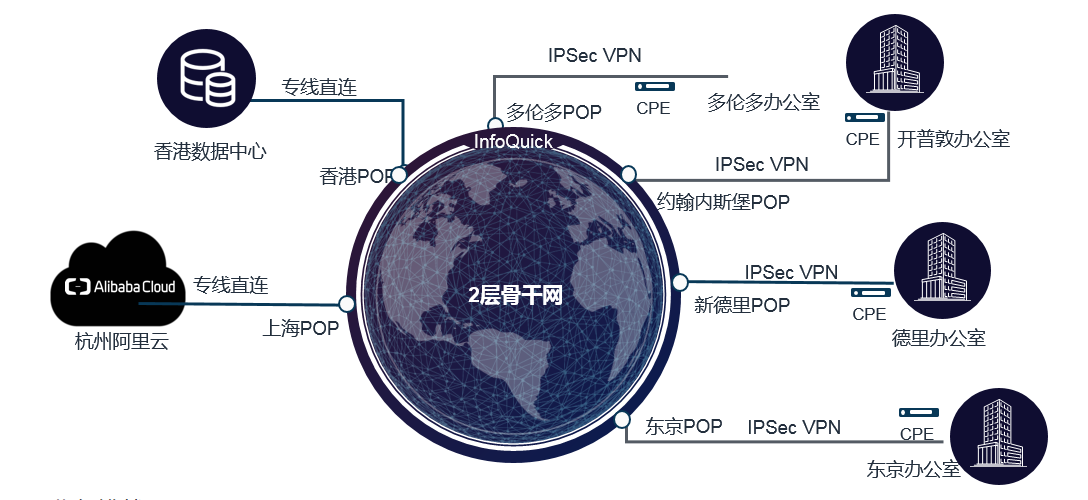
Critical applications
Set preferred and alternate paths according to dependency, latency and continuity, and test the effect of circuit changes on sessions.
Real-time voice and video
Watch jitter, loss and queues so large transfers and backup do not consume the bandwidth required for meetings.
Cloud and internet access
Compare local breakout, centralized egress and cloud-security access against performance, audit and policy needs.
04
From pilot site to staged rollout
Because SD-WAN changes existing WAN routing, a representative site validates circuits, policies, edge integration and fault handling first. The proven template can then be adapted for later sites.
- 01
Site and application discovery
Record circuits, bandwidth, addressing, routing, security devices, applications, operating windows and site constraints.
- 02
Target topology and policy
Define site roles, circuit use, routing, application priority, security boundaries and management permissions.
- 03
Lab or pilot validation
Test edge onboarding, tunnels, routing, path selection, alerts, logs and manual rollback.
- 04
Wave-based site cutover
Bring sites online by risk and business window, validating connectivity, applications, quality and fallback for each one.
- 05
Central operation and tuning
Observe circuit quality, policy hits, traffic shifts and site alerts, then adjust rules against evidence.
05
Monitoring and fault isolation
A central platform provides site, circuit and application views, but alerts still need correlation with carriers, LANs, firewalls, cloud services and application logs. The operating method states who assesses, changes, contacts a provider and retains evidence.
Circuit-quality baseline
Track latency, jitter, loss, throughput and outage, separating transient variation from sustained degradation and complete failure.
Site and policy state
Check edge availability, tunnels, routing, policy versions and change results to prevent configuration drift.
Cross-team evidence
Package timestamps, sites, applications, paths, captures and completed actions for carriers and other technical parties.
06
Handover records and boundaries
The enterprise should understand sites, application policy and daily operations without relying on implementers’ memory. Records also identify existing security and carrier responsibilities instead of attributing every network issue to one platform.
Site and circuit register
Record devices, addresses, circuits, bandwidth, providers, contacts, business hours and site-access conditions.
Topology and policy guide
Describe tunnels, routing, application classes, paths, priorities, security relationships and fallback.
Configuration and operations
Retain templates, permissions, changes, alerts and common checks, including approval conditions for high-risk operations.
Site acceptance records
Keep connectivity, application, quality, failover and rollback results for each site.
For a related implementation path, you can also review Enterprise Hybrid Cloud Management Platform, Network Equipment, Switching and Routing, Intelligent Security and Access Control.
Questions
Questions specific to this solution
Can SD-WAN replace private circuits directly?
That depends on application latency, stability, security and local circuit options. Many environments combine private and internet services rather than replacing one universally.
Must all branch addressing and networks be rebuilt?
Not necessarily. Addressing, routing, firewalls and site constraints are reviewed first, with a compatible and phased migration preferred where practical.
Does SD-WAN include every security function?
Capabilities vary. Firewalls, identity, endpoints, cloud security and compliance requirements still need to be evaluated as a complete boundary.
How is circuit failover validated?
A controlled window simulates failure and checks tunnels, routing, application sessions, recovery behavior and alerts, with a manual rollback retained.
How can a new branch be added quickly?
A verified site template accelerates preparation, but local circuits, addressing, installation and application differences must still be confirmed.